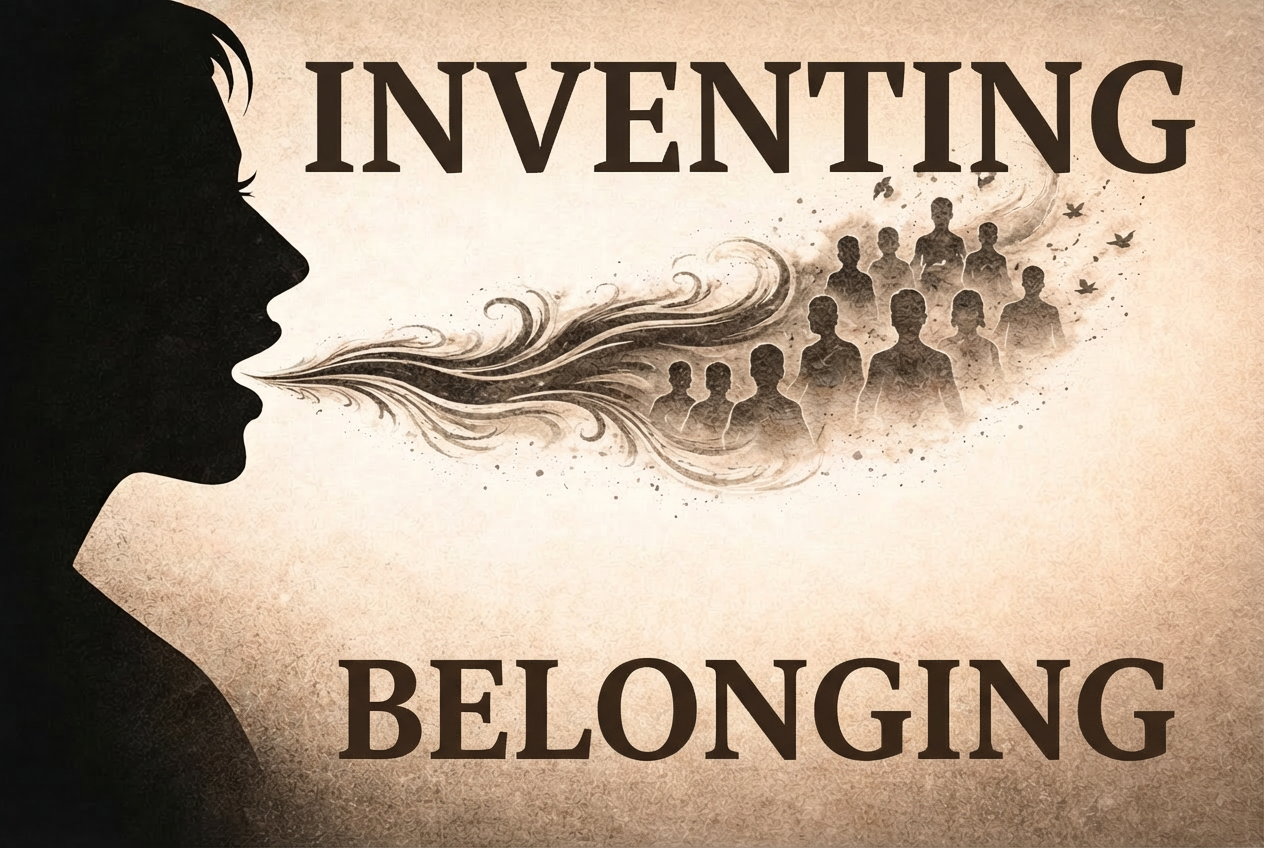
I can’t remember my first lie.
Not because it didn’t matter, but because it felt normal.
If I’m honest, there was a part of me that felt like my existence was a bit of a lie. I didn’t think about it that way as a child. I didn’t have the words for it. But the feeling was there somewhere underneath.
Inside our home I felt safe. Loved. Certain.
Outside it, something changed.
I became watchful. A bit anxious. Always aware.
What I remember most is the way people looked at me.
Not admiration. More curiosity. Sometimes confusion. The kind of look that says something doesn’t quite add up.
It didn’t quite add up because I was adopted — Māori, born in Aotearoa/New Zealand and raised in a white family.
My parents were proud of me. My father especially. Maybe pride softened what they saw. Maybe they simply didn’t notice the looks.
But I noticed.
Even when I was young I could feel it — that quiet sense of being different.
We weren’t poor, but we didn’t have much spare either. I was the youngest of six children and the only adopted one. Eight of us lived in the house.
The house was busy. Loud. Always something going on.
But childhood is full of comparisons.
You notice things — houses, cars, how many siblings someone has.
Some of my friends were only children, or had just one sibling. Even if their parents earned less, fewer mouths to feed sometimes meant their homes felt bigger. Calmer.
And then there were toys.
It was the late 70s moving into the 80s, and toys seemed to be getting bigger and better every year. You saw them on television, in shop windows, and in other kids’ hands at school. And like most kids, I wanted them.
When I couldn’t have them, I made things up.
My friends brought toys to school. They invited me to their houses.
I always had a reason not to invite them to mine.
“Our house is being done up,” I would say.
“When it’s finished you can come over.”
If I didn’t bring a toy in, it was because I had lent it to someone. A friend had it. A neighbour.
The lies weren’t big.
They were small adjustments. Little ways of smoothing things out.
Long before I understood identity, I understood something else.
If you can’t match what people expect, sometimes you make something up that does.
Every morning I walked to school with my neighbour who lived up the hill from us. We had grown up together and were good friends. We stayed friends into our teenage years before life slowly took us in different directions.
Primary school had its own quiet rules. Kids compared everything — toys, birthday parties, houses.
I wasn’t left out. I had friends.
But acceptance and belonging are not the same thing.
Certain things seemed to matter.
Whose house you visited.
What toys you owned.
What car your parents drove.
One of my best friends at school was the popular boy.
When adults weren’t around, he could be sharp. Sometimes unkind.
Looking back now, I think it was a small kind of power. Nothing dramatic, but enough to remind me where I stood.
And I accepted it. Being beside him still felt safer than standing on my own.
Even then, I understood something about hierarchy.
And I understood that being close to approval sometimes came at a cost.
One memory from that time has stayed with me.
My father bought a new family car — a bright orange Morris Marina coupé with a black sports stripe. Two doors, with seats squeezed into the back. Automatic. He was proud of it.
But my friends’ parents drove newer Japanese cars — Hondas, Toyotas, Mitsubishis.
At seven or eight years old I translated that difference into one word.
Better.
Every Sunday we went to church. My best friend’s family went too. There were two Mass times — nine and eleven — and I always hoped we would go to the one they didn’t.
The church car park was wide and open.
One Sunday as we drove in, I saw their car straight away. A shiny Toyota.
During the whole service I could barely concentrate.
All I could think was:
I hope he doesn’t see our car.
When Mass ended I hurried my parents toward the exit, hoping we could leave before everyone gathered outside.
But his family was still there.
I slid into the back seat and kept my head down. I saw him coming out of the church. I held my breath, hoping he wouldn’t connect me to that orange car.
We drove away.
It sounds small now. But at the time it mattered a lot.
That night I couldn’t sleep. I kept thinking about Monday morning and what he might say.
Today we would call it anxiety. Back then it was just something you carried quietly.
The next day at school I saw him and forced a smile.
“What are you smiling at?” he snapped.
Then he started laughing about my parents’ car. What a dump it was.
I felt the heat in my face. That familiar shrinking feeling.
And still, he was my best friend.
I still wanted his approval. His protection. Even when it came with humiliation.
Those feelings didn’t just disappear.
Embarrassment turned into anger.
Anger turned into envy.
Envy turned into longing.
And that longing slowly became something else.
A quiet blueprint forming in my mind.
A different car.
A different house.
A different story.
A different version of myself.
I didn’t realise it then, but that idea stayed with me for years — the sense that if I could change the story enough, maybe I would finally belong.
 The Lies That Made Me: The Invention of Belonging.
Leave a comment